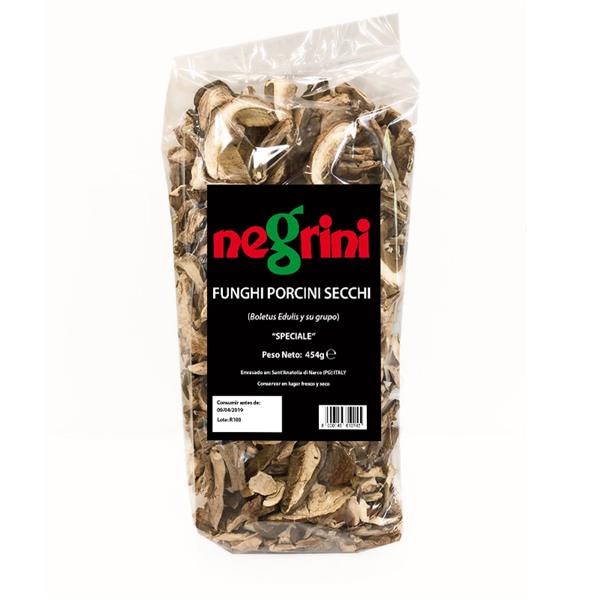
DRIED PORCINI MUSHROOMS
DRIED PORCINI MUSHROOMS
Couldn't load pickup availability
Dried porcini mushrooms are an ingredient no pantry should be without. With this special ingredient, you can prepare a variety of dishes, appetizers, main courses and side dishes that will enhance the unique aroma and flavor of this legendary mushroom.
Try preparing a Crema di funghi for your crostini and bruschette, a Risotto ai funghi as a main course, or Patate e funghi al forno as a side dish, three recipes you can find on the La Cucina Italiana blog, suggested by Giorgia di Sabatino.
There are several ways to hydrate dried mushrooms: in cold water or milk for about 10 minutes, steamed, or in vegetable broth (if the broth is hot, hydration will be much faster).
The origin of porcini
The term porcino, which also exists in Portuguese, comes from porco ("of pig" or "related to pig") and many believe (although it is far from certain) that its origin lies in the fact that it is a food particularly appreciated by pigs. For the Romans, it was the fungus suillus, the mushroom of pigs. In Portuguese, these mushrooms are commonly called Boleto, a term extended to mushrooms of the genus Boletus, which includes edible and poisonous species (the latter are characterized by the bluish color that the pulp acquires when exposed to air).
The word "mushroom" is very old, originating in the Mediterranean region. Greek has a similar word, sp(h)òngos, which means sponge. Mushrooms have been, since time immemorial, a much-loved fruit of the earth, but also feared, due to the risk of poisoning, the most famous of which was that of Emperor Tiberius Claudius, poisoned with poisonous boletes by his wife Agrippina, as Maurizio Ferrari, man of letters and President of the cultural association Amo la montagna APS, points out: "[This poisoning] opened the doors of the Empire to another poisonous fruit, Nero. At least that's what Pliny the Elder, the great scientist of the 1st century AD, tells us."
Partilhar