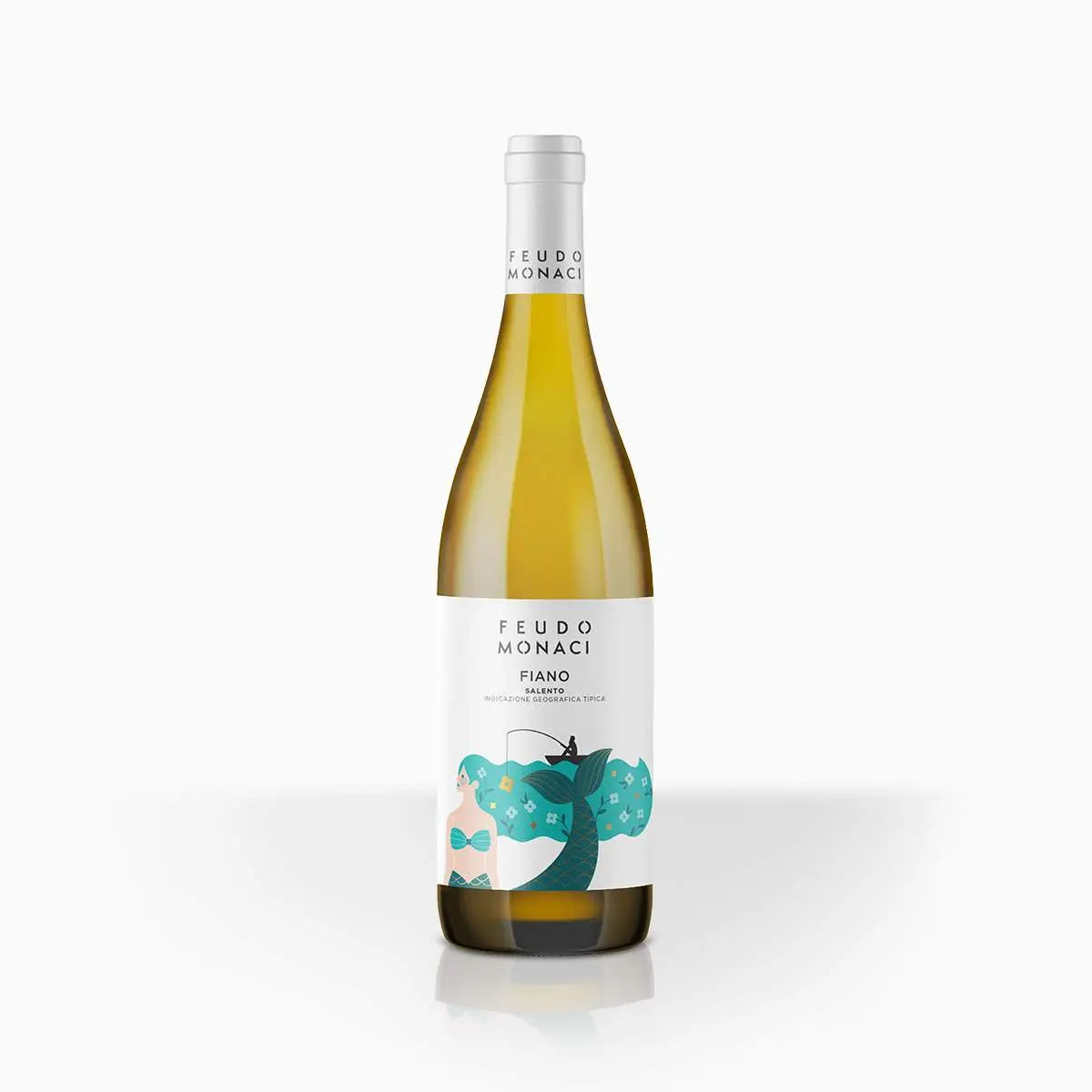
FIANO SALENTO IGT
FIANO SALENTO IGT
Couldn't load pickup availability
Tasting notes: Straw yellow with greenish reflections, it has a clean and striking aroma with subtle citrus notes. Elegantly perfumed, with pleasant aromas and intense flavours that linger on the palate.
Food pairing: appetizers, delicate pasta and rice dishes, fish and seafood.
Origin: Salice Salentino, province of Lecce, Puglia
Year: 2024
Grape varieties: 100% Fiano
Alcohol content: 12%
Serving temperature: should be served between 10ºC and 12ºC
Castello Monaci
The Castello Monaci winery is a splendid 210-hectare estate in Salice Salentino. The property has been managed by the same family for four generations and is currently run by Lina Memmo. The estate is located between the provinces of Brindisi, Lecce and Taranto, exposed to the influence of both the Ionian and Adriatic Seas.
The castle is an imposing fortification dating back to a settlement of ancient French monks from the first half of the 16th century. Next to it is an important museum, dating from the 1930s, which highlights the history of local viticulture. Built in the 1970s, Monaci's barrel-shaped cellar was carved into the white tufa rock, the deepest layer of soil in the surrounding vineyards. Today, it houses more than 1000 barrels.
The winery is equipped with modern winemaking facilities, including a refrigerated pressing system with small capacity steel tanks, thermoconditioned with a double chamber, to allow for the separate vinification of limited quantities of grapes, highlighting the specific character of each plot.
Leonardo Sergio has been the winemaker and production manager since 2001. Born in 1962, he graduated in Agronomy in 1981 and obtained the title of Oenologist in 1984 at the Basile Caramia di Locorotondo Oenological Institute. For thirteen years, he worked as a wine consultant for 12 wineries in Puglia and 3 in Calabria, managing the entire production chain: from the cultivation of the vines to bottling.
Castello Monaci believes in an even broader concept of sustainability, which considers the correct management of production, to minimise the carbon footprint and the impact of winemaking.
Partilhar