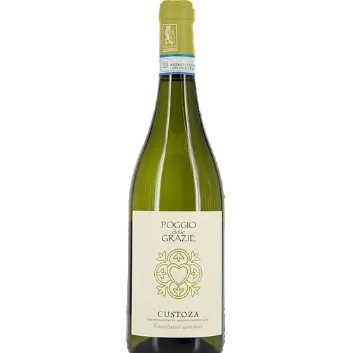
CUSTOZA ORGANIC DOC
CUSTOZA ORGANIC DOC
Couldn't load pickup availability
In this Bianco di Custoza, the indigenous vines offer light fruity notes accompanied by the minerality that these clay and stony soils release in abundance.
It is a natural wine, spontaneously fermented and unfiltered. Although there is no uniform definition of natural wine, it is generally produced without the use of pesticides or herbicides and with few or no additives. It is produced on a small scale, using traditional rather than industrial techniques, and fermented with native yeasts.
Pale yellow in colour, the aroma reveals aromatic herbs and green apple. On the palate, it is very balanced: mineral, with notes of sage, thyme, and savory. An organic wine, spontaneously fermented and unfiltered, with good structure but low alcohol content.
It is the ideal companion for starters, grilled vegetables, sushi, seafood, and white meats.
Provenance: Veneto
Year: 2024
Grape varieties: Garganega, Trebbiano, Friulano
Alcohol content: 12%
Serving temperature: should be served between 10ºC and 12ºC
Poggio delle Grazie
Poggio delle Grazie was founded a stone's throw from Lake Garda – a region long renowned for producing white, red, and rosé wines.
The winery is located at the meeting point of two important appellations of origin in the region: DOC Bardolino and DOC Custoza. Access to a wide variety of indigenous grapes, both white and red, has allowed it to unleash creativity and produce a diverse portfolio, which includes Quadrivium, a single-varietal made with the Corvina grape, or an Orange wine from Pinot Grigio.
In the heart of the vineyards stands a small church, built in 1947, which inspired both the winery's name and logo. A magical place that holds many stories and is worth a visit.
Sustainability
Sustainability is an essential component of the Poggio delle Grazie project, which has obtained organic certification.
It is a daily effort to protect the environment they cultivate with such care and passion – a landscape dominated by shades of green and blue. The vegetation is cut between rows alternately to encourage the presence of pollinating insects, while ensuring they do not interfere with the vines or grapes. They manage the soil under the vine rows mechanically, completely eliminating the use of chemical herbicides. Through constant monitoring of insects and diseases, Poggio delle Grazie ensures that the grapes destined for their wines remain healthy and in perfect condition. Biodiversity is favoured by the presence and cultivation of indigenous grape varieties, along with olive trees and other local flora species. This creates a perfectly balanced ecosystem.
To preserve a precious resource like water, they use a drip irrigation system in their vineyards. This is the most precise method to minimise water waste; furthermore, it allows the vines to be kept under controlled water stress, which contributes to the production of high-quality grapes.
Partilhar